Get a free quote for your business

Gas detectors for H2 hydrogen gas monitoring

Learn all about hydrogen (H2) and find the right gas detection system for hydrogen monitoring.
Hydrogen gas molecule

Hydrogen and its properties

Hydrogen, a colorless, odorless and tasteless gas, consists of a single hydrogen atom. It is the lightest and most common element in the universe and is only found in small quantities in the Earth’s atmosphere because it quickly escapes into space.

Hydrogen poses a great risk in industrial environments due to its high flammability. Together with oxygen, it produces explosive mixtures that can explode in the event of sparks or heat. In addition, hydrogen can displace oxygen in large quantities, leading to a risk of asphyxiation.

Hydrogen is considered a promising energy carrier because it only produces water during combustion and does not release any greenhouse gases. Its importance extends to ammonia production, energy generation in fuel cells, oil refining and many chemical processes.

Gas detector

I2608-H2-E
H2
Hydrogen
0 ... 4'000 ppm
S2157H2
H2
Hydrogen
0 ... 100 % LEL
S4003H2
H2
Hydrogen
0 ... 100 % LEL
I2608-H2-E-DM
H2
Hydrogen
0 ... 4'000 ppm
I2608-H2-E-RP33-LCD
H2
Hydrogen
0 ... 4'000 ppm
I2608-H2-E-RP33
H2
Hydrogen
0 ... 4'000 ppm
I2608-H2-E-RLCD
H2
Hydrogen
0 ... 4'000 ppm
I2608-H2-E-LCD
H2
Hydrogen
0 ... 4'000 ppm
I2658-H2-E-3G
H2
Hydrogen
0 ... 4'000 ppm
I2648-H2-E
H2
Hydrogen
0 ... 4'000 ppm
I2618-H2-E
H2
Hydrogen
0 ... 4'000 ppm
I3605-LEL-M-LCD
H2
Hydrogen
0 ... 100 % LEL

Alarm levels & Set points

Important information on hydrogen

Hydrogen gas molecule

Set point

Lower explosion limit (LEL) 4 vol. – %

  • Pre-alarm 10% LEL (0.4 vol. – %)
  • Main alarm 20% LEL (0.8 vol. – %)
Hydrogen gas molecule

gas density

  • Relative gas density 0.0695
  • ceiling installation

Gas characteristics

  • Colourless
  • Odourless
  • Compressed gas
  • Liquefied gas at extremely low temperatures
  • Contains refrigerated gas
  • Risk of suffocation at high concentrations
  • Explosive when in contact with heat or sparks
  • May cause frostbite on direct contact with liquefied hydrogen

Do you require further information?

Questions about the detection of hydrogen?

Sources of danger

  • Explosion hazard: Hydrogen is highly flammable and can form explosive mixtures.
  • Risk of suffocation: In closed rooms, hydrogen displaces oxygen.
  • Leaks: Hydrogen is difficult to detect as it is colorless and odorless.
  • Overpressure risk: Improper handling of compressed hydrogen can lead to explosions.
  • Cold burns: Liquid hydrogen can cause severe frostbite.
  • Material embrittlement: Hydrogen can embrittle metals and jeopardize their stability.
  • Spark hazard: Static electricity can ignite hydrogen.
  • Insufficient ventilation: Insufficient ventilation increases the risk of hydrogen accumulation and explosions.

high-risk scenarios

  • Hydrogen leakage: Hydrogen gas escapes from leaking pipes or containers, increasing the risk of explosion.
  • Explosion on ignition: Hydrogen gas is ignited by a spark, an open flame or high temperatures, which can result in explosive events.
  • Asphyxiation: In enclosed spaces, hydrogen can replace oxygen, resulting in a lack of oxygen and thus a risk of asphyxiation for people.
  • Storage and transportation: Compressed hydrogen can cause overpressure, explosion or leakage due to improper storage or transportation.
  • Liquefaction and cold burns: Contact with liquid hydrogen can cause severe cold burns or frostbite.
  • Reaction with metals: Hydrogen can cause certain metals to become brittle, which can lead to material failure and leaks.
  • Insufficient ventilation: If work areas in which hydrogen is used are not sufficiently ventilated or there is no ventilation at all, the risk of accumulations and thus explosions increases.

Health risks and handling of hydrogen

Concentration

KonzentrationSymptome/folgen
%gas-rep-concentration% %gas-rep-consequences%

Concentration table only visible in landscape format.

Exposure to hydrogen (H2) can be life-threatening and requires immediate first aid measures. These first aid steps for hydrogen exposure should be followed:

1. Evacuation without delay

Move to fresh air immediately: Take the affected person outside immediately. Hydrogen has the ability to replace oxygen, which can cause suffocation. Be careful and do not put yourself in danger.

2. Raise the alarm

Call the emergency services (112) and report suspected hydrogen exposure or a possible incident. Provide as many details as possible, for example whether it is an incident in an industrial plant.

3. Check breathing and whether the person is conscious.

Ensure that the person is conscious and breathing normally. If the person is not breathing, start resuscitation (cardiopulmonary resuscitation) if you are trained to do so.

4. oxygen administration

If possible, give the affected person oxygen via a face mask to improve the oxygen supply.

5. The recovery position

If the person is conscious but dazed, place them in the recovery position to prevent them from choking on their vomit or their airways becoming blocked.

6. Pay attention to the person

Keep an eye on their breathing and consciousness until the emergency services arrive.

7. Further measures

Communicate with the arriving emergency services and provide them with important information, such as the duration of exposure and the situation on site.

Important note:

Never go back without adequate respiratory protection or safety precautions if you suspect you may return to an area with hydrogen. Without prompt treatment, hydrogen exposure can have serious consequences; therefore, quick action is critical.

In the event of an accidental hydrogen (H2) release, quick and coordinated actions are crucial to minimize danger to nearby people. The following steps are recommended:

1. Clearing the danger zone

Leave the affected area immediately, especially if hydrogen appliances or systems are being operated in the vicinity. Alert others in the vicinity and ensure that everyone leaves the area quickly and safely.

2. Optimise ventilation

To remove hydrogen from the affected area and replace it with fresh air, open doors and windows as wide as possible. If available, activate ventilation systems to speed up ventilation.

3. deactivate the hydrogen source

If it is safe to do so, deactivate the hydrogen source (e.g. containers, pipelines). Be careful and do not take any risks, as hydrogen is highly flammable.

4. Make an emergency call

Contact the emergency services (112) immediately to obtain professional assistance, especially if people are affected or the danger cannot be eliminated quickly. Provide clear information about the situation and the type of hydrogen source.

5. Rescue of persons (only if it is safe to do so)

Only attempt to remove people from the danger zone if it is safe to do so and you are not putting yourself in danger. Keep in mind that hydrogen in high concentrations can displace oxygen.

6. Administer first aid

If people show symptoms of hydrogen exposure (e.g. in case of shortness of breath, dizziness or confusion, follow the first aid measures for oxygen deficiency:
– Take the person outside.
– Give oxygen if available.
– Observe breathing and state of consciousness.

7. Warning and cordoning off

7. Warning and cordoning off: Cordon off the danger area to prevent others from accidentally entering it until the danger has been removed.

Important note:

You should not enter the area without suitable respiratory protection, especially if the hydrogen concentration is high or you are not aware of it. Releasing hydrogen can cause serious accidents; it is therefore crucial to always act with caution and foresight.

Headaches, dizziness, confusion, shortness of breath, and unconsciousness as well as bluish discoloration of the skin (cyanosis) are typical symptoms of hydrogen exposure in areas with oxygen deficiency.

Hydrogen

Special applications and considerations

  • Fuel cell vehicles: Hydrogen is used in fuel cells to enable emission-free driving. These vehicles convert hydrogen into electrical energy and only emit water vapor in the process.
  • Energy generation: Hydrogen can be burned in thermal power plants or used in fuel cells to generate electricity. This enables flexible energy generation and the integration of renewable energies.
  • Metal processing: Hydrogen is used for the reduction of metal oxides in metallurgy to obtain pure metal and for the heat treatment of metals.
  • Coolant in generators: In some industrial applications, hydrogen is used as a coolant to efficiently dissipate heat in electric generators.
  • Environmentally friendly synthesis: Hydrogen can be used in the chemical Industry to produce environmentally friendly chemicals, reducing dependence on fossil fuels.
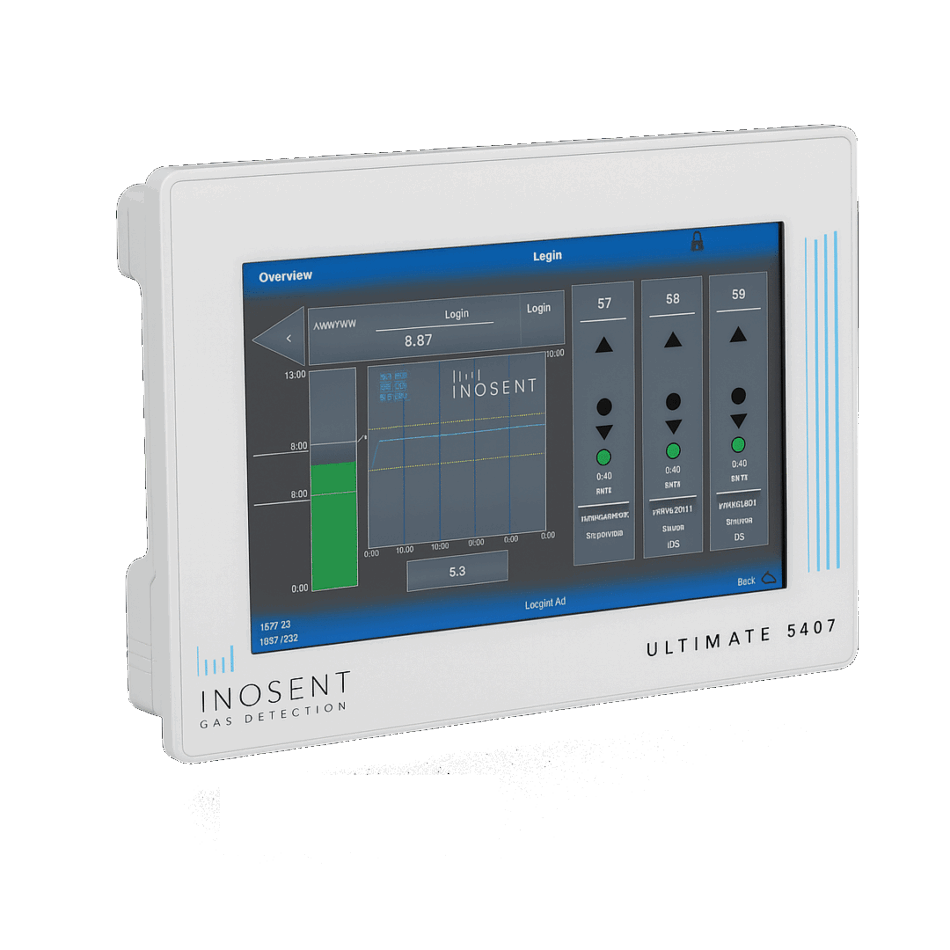
Gaswarnzentrale Ultimate 5407
Discover the Gas monitors from INOSENT Gaswarntechnik AG.
Gaswarnzentrale Ultimate 5407
Discover all the information about the Ultimate 5407 Gas monitor and the associated data sheet.
Gaswarnzentrale Compact Pro
Discover all the information about the Compact Pro Gas monitors and the associated data sheet.
Discover all the information about the Cool Gate Gas monitors and the associated data sheet.
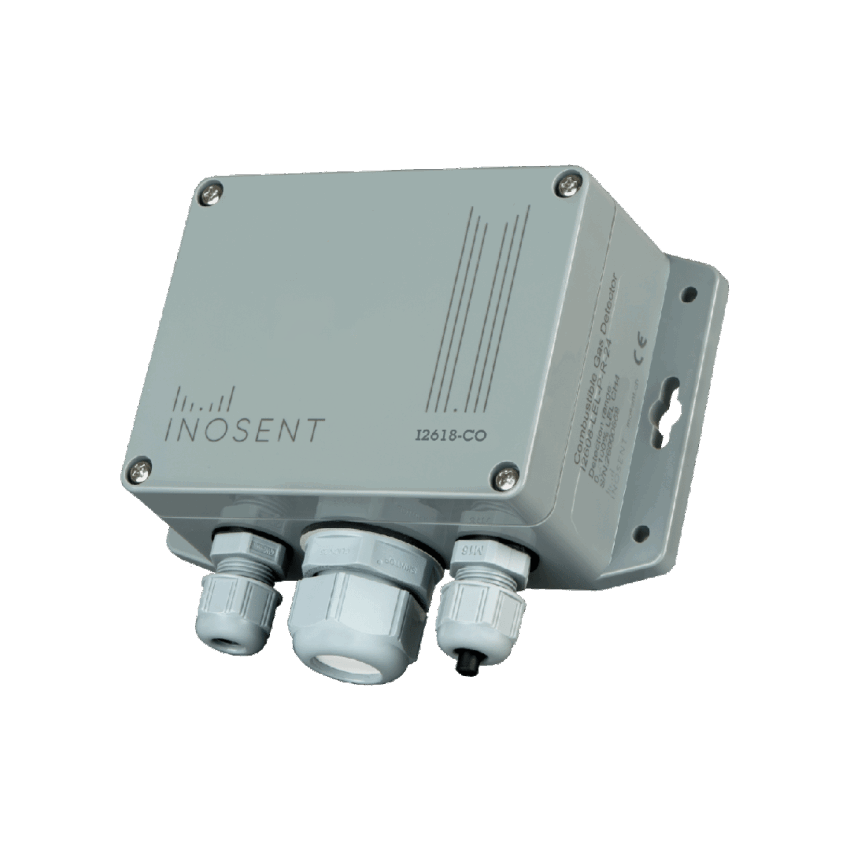
Gasmessfühler I2608
Discover the wide range of Gas detectors from INOSENT Gaswarntechnik AG.
Gasmessfühler zur Detektion von Gasen
With the I26xx series, INOSENT offers specialized solutions for application areas. Here you will find an overview of all GxxC series Gas detectors.
Interface adapter for Gas monitors

Adapter Released

Ultricies mi eget mauris pharetra et. Sagittis eu volutpat odio facilisis mauris sit amet massa.

Calibration station for mobile gas detectors

G7 Dock Bump Test Station

BLACKLINE SAFETY G7c personal safety monitor with optional

Gas monitors Ultimate

Ultimate-5307

Etiam sit amet nisl purus in mollis nunc. Nulla aliquet enim tortor at. Tincidunt vitae semper quis lectus

Mobile gas detector

Blackline G7c

Duis aute irure dolor in reprehenderit in voluptate velit esse cillum dolore eu fugiat nulla pariatur. Excepteur sint

Mobile gas detector

GX-6000

Libero nunc consequat interdum varius sit amet. Mauris pharetra et ultrices neque ornare aenean euism

Mobile gas detector

RP-3R-1

Ut lectus arcu bibendum at varius vel pharetra vel. Pharetra massa massa ultricies mi quis.